

Operator portal
Machine health and uptime
Live-style monitoring for every unit: channels, compressor, calibration, connectivity, throughput and revenue.
Simulated real-world data being used for demonstration purposes
Sessions today
148
Revenue today
£412
Uptime
99.2%
Queue
0
168s average session
FL
21,430 cycles
FR
20,980 cycles
RL
22,110 cycles
RR
21,870 cycles
Evidence base
Why a forecourt operator should care
The commercial case sits on documented demand: a very large share of vehicles arriving on any forecourt are already outside specification.
Drivers want help, not equipment
37% of drivers report low confidence inflating their own tyres, which is why a guided four-hose session converts where a coin-operated hose does not.2024
Cited on this page
- The Motor Ombudsman (2024). Driving under pressure is costing the nation's motorists at least GBP 112 million every year in lost tyres. The Motor Ombudsman research study.
- British Tyre Manufacturers' Association (2025). Where are tyres made? UK tyre supply volumes. BTMA.
- Tyres Europe (formerly ETRMA) (2026). Quarterly Statistics Update, Q4 2025. Tyres Europe.
- UK Department for Transport (2025). Reported road casualties in Great Britain (annual statistics). DfT official statistics.
These are published third-party sources, not AiR simulation. The full bibliography - peer-reviewed papers, reference monographs, government reports, international standards and official statistics - lives in the science lab.
Open the research and full bibliographyEdge session, synchronised
Node compute, connectivity and federated rounds
Per-node allocation and round behaviour for the currently modelled edge session, shared with the simulator, the digital twin and the fleet portal.
Available per node
157TOPS
157 TOPS peak, power derated
Safety reservation
43.9TOPS
Never pre-empted
Shared compute
97.3TOPS
62% of the node
Fleet useful capacity
141,200TOPS
0.0455% of the 100 MW reference
Scheduler allocation
Federated round in this session
- A host share above 60 percent should be contracted with an explicit thermal, power and privacy schedule.
Federated learning behaviour
Data flow, stage by stage
- 01
Sense · Node, L0
Pressure, temperature, valve state and session context captured at the channel. Raw sensor data never leaves the enclosure in raw form.
- 02
Decide locally · Node, L1
The deterministic engine selects an approved profile, applies the thermal allowance and safety clamp, and drives the channels. No network dependency exists at this stage.
- 03
Infer and redact · Node, L2
Onboard inference runs anomaly, leak-pattern and integrity checks, then the redaction pipeline strips identifiers and derives features before anything is queued for transport.
- 04
Sign and classify · Node, L2
The session record is signed with the device key and each outbound message is tagged P0 to P4, which fixes its transport, priority and residency for the rest of its life.
- 05
Transport by class · L3
P0 and P1 take whichever path is available, LoRa included. P2 to P4 wait for IP. Bulk traffic is deferred to off-peak windows and never touches the resilience plane.
- 06
Broker regionally · Anchor, L4
Anchors cache models, broker compute work units, forward Reticulum traffic and hold store-and-forward queues for nodes that are currently unreachable.
- 07
Reconcile centrally · Control plane, L5
Signed sequence numbers and idempotent processing mean queued events replay safely when IP returns. Duplicate delivery over two planes is expected and harmless.
- 08
Aggregate and serve · L6
Personal records land in the UK sovereign service, anonymised trends in the analytics plane, tenant outputs in an isolated namespace. The three are never joined.
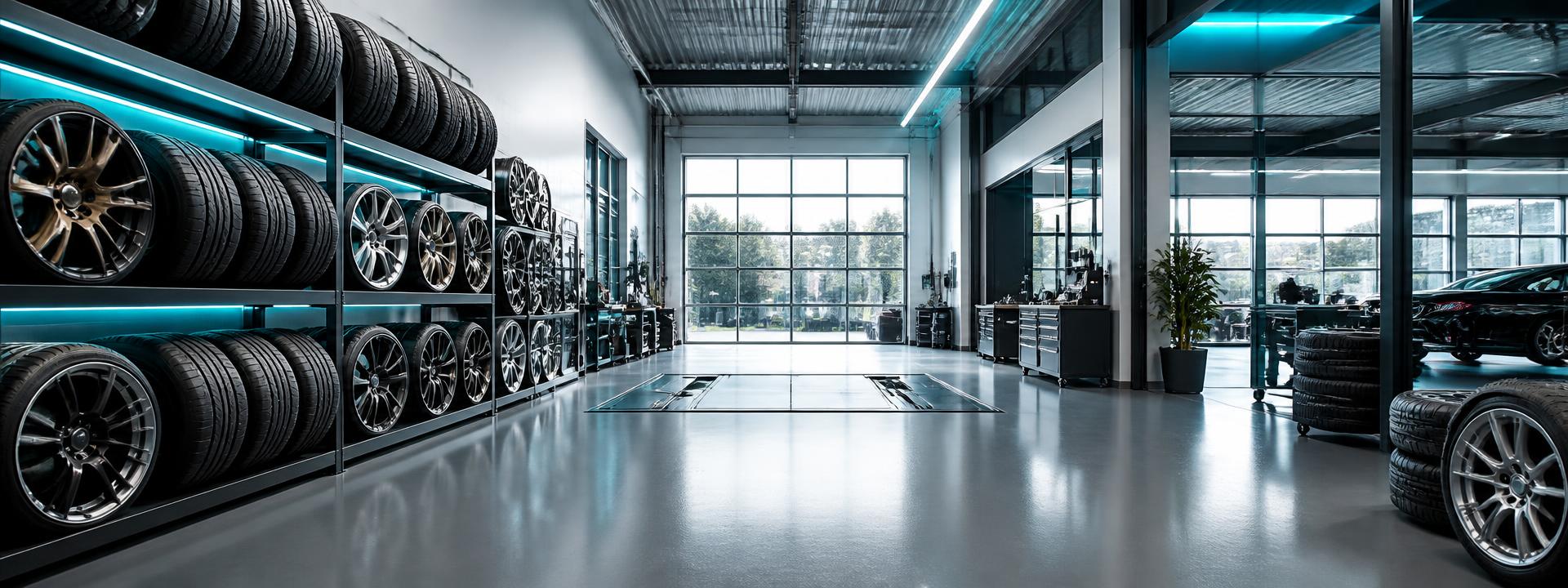
Uptime is the product
Channel health, calibration windows and throughput in one view.
Operator economics
A forecourt asset that reports on itself
For the site operator the question is simple: does this bay earn more than the air line it replaces, and how often will someone have to attend it?
Machine uptime
0.0%
Sessions per day per unit
0
Mean time to diagnose
0 min
Remote diagnostics before any van is dispatched.
Scheduled attendance
0 /yr
Calibration and consumable replacement.
Every valve cycle, retractor pull and compressor hour is counted. Components are replaced on condition and cycle count rather than after a failure that closed the bay.
- Per-channel valve and transducer cycle counts
- Compressor duty and reserve trend
- Hose retractor wear projection
- Remote firmware and profile updates during quiet hours
Questions