
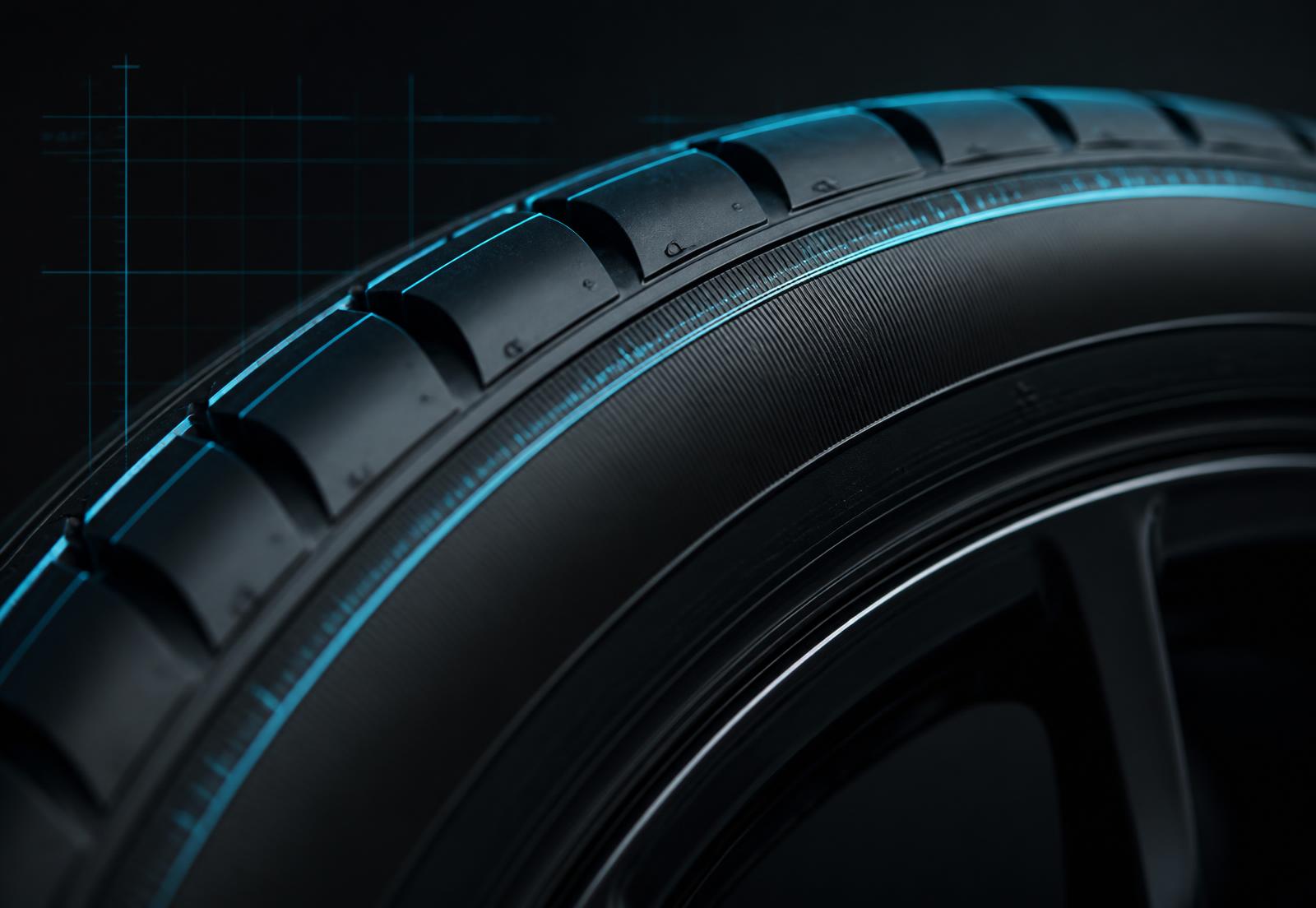
The tyre warranty nobody can claim, made claimable.
Mileage guarantees, workmanship cover and irregular wear claims all carry the same clause: nothing caused by improper inflation. No driver can disprove it, so the cover quietly evaporates. A verified four-channel check every 90 days produces the record that changes the answer, on every forecourt, in every market.
Simulated real-world data being used for demonstration purposes
Check cadence
0 days
One verified session per quarter
Checks a year
0
The compliance threshold for cover
Evidence points per session
0
One per wheel, measured and corrected
Categories unlocked
0
Previously excluded or unenforceable
The state of cover
Every tyre already carries a warranty. Almost none of it is reachable.
These are the cover types sold across the industry today, and the clause that neutralises each one. The exclusions are reasonable. The problem is that nobody generates the evidence to sit on the other side of them.
Evidence the warranty can trust
Ninety days of verified pressure history attached to every tyre on the vehicle.
What changes
Excluded today. Claimable with a verified record.
Each category below is decided by the same question: can anyone show how the tyre was actually run? Four checks a year answers it, per wheel, with a timestamp and a registration.
Shoulder and inner-edge wear
UnlockedToday
Refused. Wear at the shoulders is the classic signature of running under specification, so the claim is attributed to the driver.
With a verified record
Claimable. A quarterly record showing pressure held at the placard target removes under-inflation as the cause and points the assessment at construction, geometry or load.
Premature centre wear
UnlockedToday
Refused as over-inflation or misuse, with no record to argue against it.
With a verified record
Claimable. Corrected pressure is capped at the manufacturer target, so systematic over-pressure can be excluded from the diagnosis.
Uneven wear across an axle
UnlockedToday
Usually treated as an alignment fault outside the tyre warranty, without data to separate alignment from pressure imbalance.
With a verified record
Claimable and correctly routed. Four independent channels prove the pair started level, so a wear split is referred to geometry rather than air.
Mileage and treadwear guarantee shortfall
UnlockedToday
Technically offered, in practice hard to claim: the guarantee is conditional on correct inflation and rotation that nobody documents.
With a verified record
Enforceable. Four compliant checks a year satisfies the inflation condition, so a shortfall against the rated mileage becomes a straightforward pro-rata settlement.
Sidewall damage and early cord or wire exposure
UnlockedToday
Split between a materials claim and impact damage, decided by the retailer at the counter with no history to consult.
With a verified record
Referable with evidence. A run-low or repeat-loss pattern in the record supports a structural referral; a clean record with a sudden loss supports an impact finding. Either way the decision is evidenced.
Load-related wear on EVs, heavy SUVs and vans
UnlockedToday
Rated life assumes a nominal load. Heavier vehicles wear faster, and the difference lands on the owner.
With a verified record
Priceable. Every session records the declared load and the target applied for it, so cover can be rated on how the vehicle is actually used.
Impact break, cuts and punctures
UnchangedToday
Covered only under a separate road-hazard programme, where one is sold.
With a verified record
Unchanged by pressure evidence, but a verified record before the event lets a road-hazard claim be dated and accepted faster.
Tread below the legal limit, or competition use
UnchangedToday
Excluded.
With a verified record
Still excluded. Verified Care evidences inflation, it does not extend cover to unlawful or track use.
The 90-day clock
Four windows a year. Miss one and cover pauses, it does not disappear.
Cover status is derived from the vehicle's own session history. Complete a session on the machine simulator and this panel moves with it.
Rolling twelve months
Q1
Open window
Q2
Scheduled
Q3
Scheduled
Q4
Scheduled
Current window elapsed
No verified check on record yet. Run a session on the machine simulator and this vehicle enrols instantly.
Claim test
Pick a category and the platform applies the same rule a claims handler would.
Shoulder and inner-edge wear
- No verified check on record. One session enrols the vehicle.
Simulated real-world data being used for demonstration purposes
The record
What a claims handler actually receives.
One session, one signed record. It is the same artefact whether the driver is a private motorist, a fleet or a race team support vehicle.
Identity
Measurement
Findings
Global standard
One cadence, every market, every vehicle that carries air.
The standard travels because it depends on the manufacturer placard, not on local convention. The unit reads the market, the units and the drive side, and applies the maker's own figure.
Units and convention
Bar, PSI and kPa presented in the local default, with the placard value as the single source of truth. Conversion never leaves the driver.
Drive side and layout
Right and left hand drive handled by hose routing, not by asking the driver to reposition the vehicle.
Vehicle classes
Cars, SUVs, vans and light commercials on four channels. Motorcycles on two, with pillion and luggage declared.
Climate
Ambient compensation applied to the reading across the operating range, so a Nordic winter and a Gulf summer produce the same specification.
Regulatory fit
Sits alongside type approval and periodic inspection rather than duplicating them. It records what neither of them records.
Data residency
Records stay in region by default. The mesh shares anomaly patterns, not personal data.
Participation
Who underwrites what.
Claim path
From a flag at the machine to a settled claim.
Eight steps, none of which require the driver to have kept a receipt or remembered a pressure.
Anomaly flagged
At the unitA channel shows repeat loss or a wear-risk pattern against the previous verified check.
Referral raised
Same sessionThe driver is advised to have the tyre inspected, with the reason written in plain language.
Record sealed
ImmediateThe session is signed at the edge and added to the vehicle's compliance history.
Inspection
RetailerA fitter examines the tyre: shoulder wear, bulge, sidewall injury, exposed belt or body cord.
History attached
AutomaticThe last four verified checks are attached to the claim automatically from the registration.
Cause assessed
AssessorInflation is either excluded as a cause or confirmed as one. The argument becomes evidential rather than adversarial.
Settlement
ManufacturerPro-rata against tread remaining for a mileage guarantee, or replacement for a materials finding.
Loop closed
NetworkThe outcome feeds the mesh, so wear-versus-pressure evidence improves for every future claim.
Driver status
Cover status, days to the next check and the record to share with a claim.
OpenFleet compliance
Which vehicles are inside the window and which are about to lapse.
OpenMachine warranty
Cover for the AiR unit itself: parts, labour, response and spares.
OpenEvidence base
Why a verified record changes what can be warranted
Tyre warranties already exist. What is missing is proof of how the tyre was run, and that absence is what turns published cover into an unclaimable document.
Structural damage has a published boundary
Industry repair guidance treats sidewall injury and exposed belt or body cord as non-repairable. Whether that is a materials finding or impact damage is the whole argument, and a pressure history is the evidence that separates them.2023
The statutory test never looks at pressure
The MOT assesses tread depth, cuts, bulges and exposed cord. Inflation pressure on the day is not an inspection item, so nothing in the legal regime creates the record a warranty needs.2025
Cited on this page
- Michelin North America (2024). Passenger and Light Truck Tire Limited Warranty. Michelin.
- Bridgestone Americas Tire Operations (2024). Limited Warranty and Owner's Manual for Passenger and Light Truck Tires. Bridgestone.
- Continental Tire the Americas (2024). Passenger and Light Truck Tire Limited Warranty. Continental.
- The Goodyear Tire & Rubber Company (2024). Highway Auto and Light Truck Tire Limited Warranty. Goodyear.
- U.S. Tire Manufacturers Association (2023). Puncture Repair Guidelines and Tire Condition Guidance. USTMA.
- Driver and Vehicle Standards Agency (2025). MOT Inspection Manual, section 5.2: Tyres. UK Government.
These are published third-party sources, not AiR simulation. The full bibliography - peer-reviewed papers, reference monographs, government reports, international standards and official statistics - lives in the science lab.
Open the research and full bibliography