
Recovery partners
Prevention, in the boot of every covered car
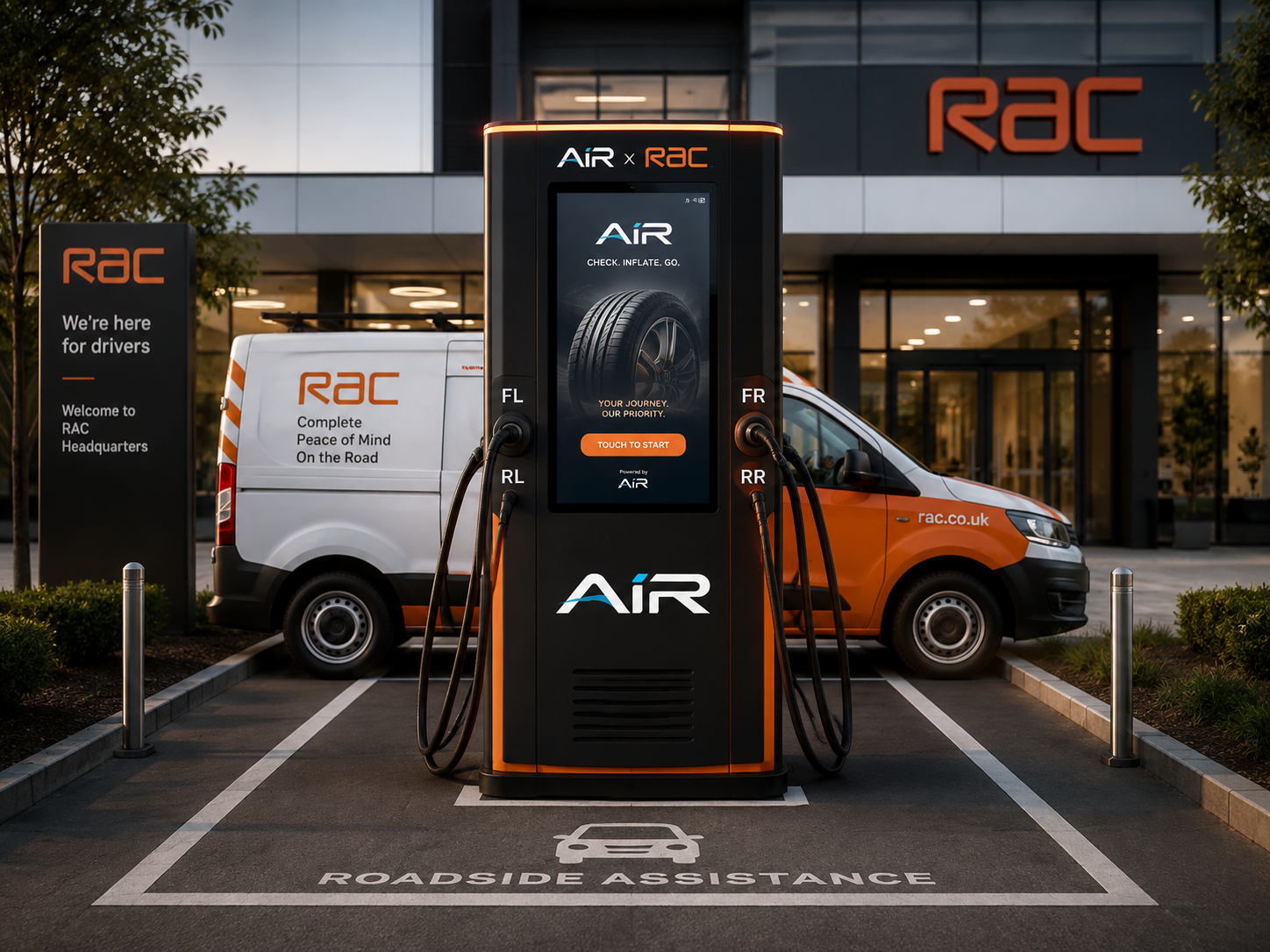
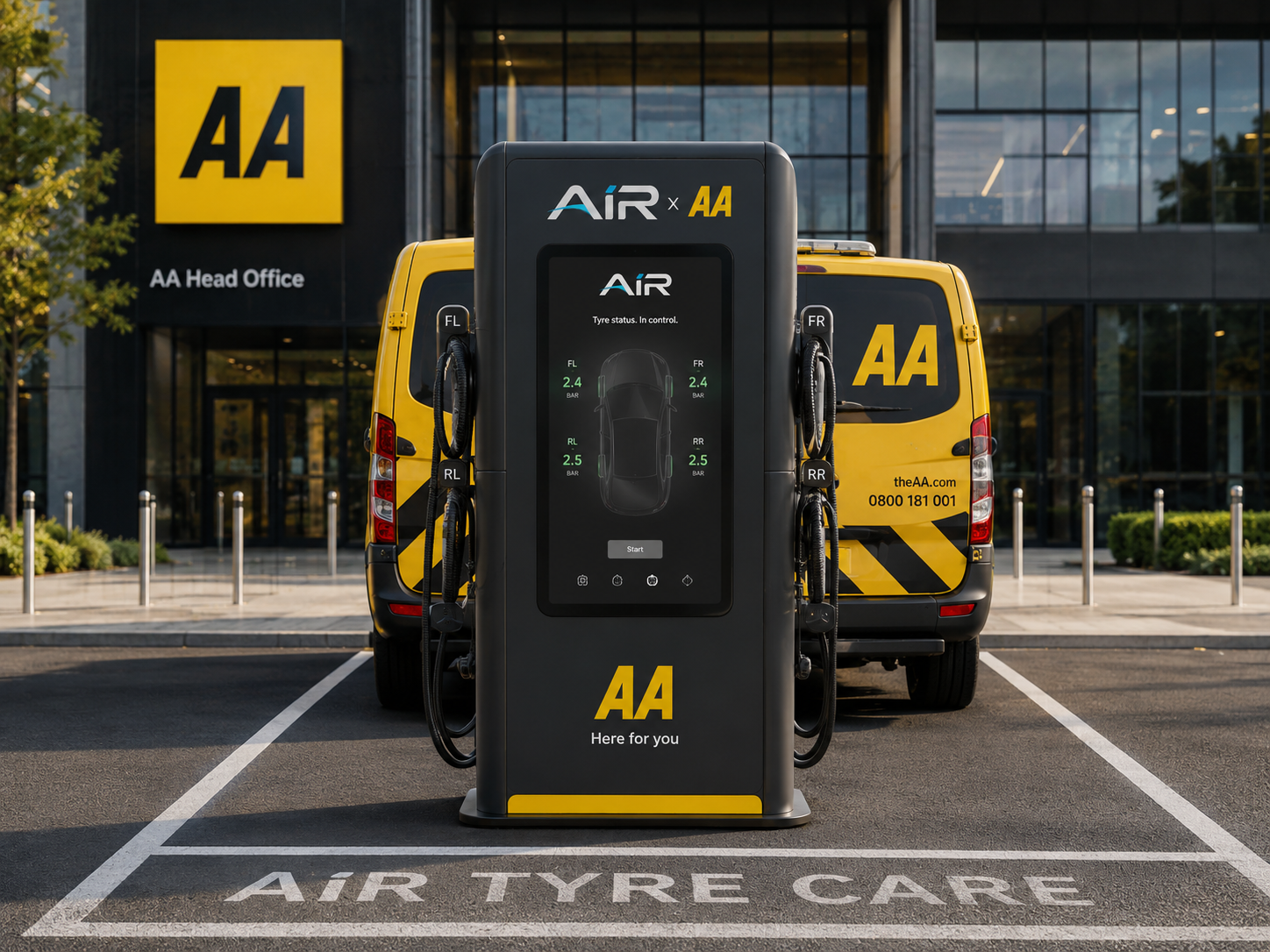
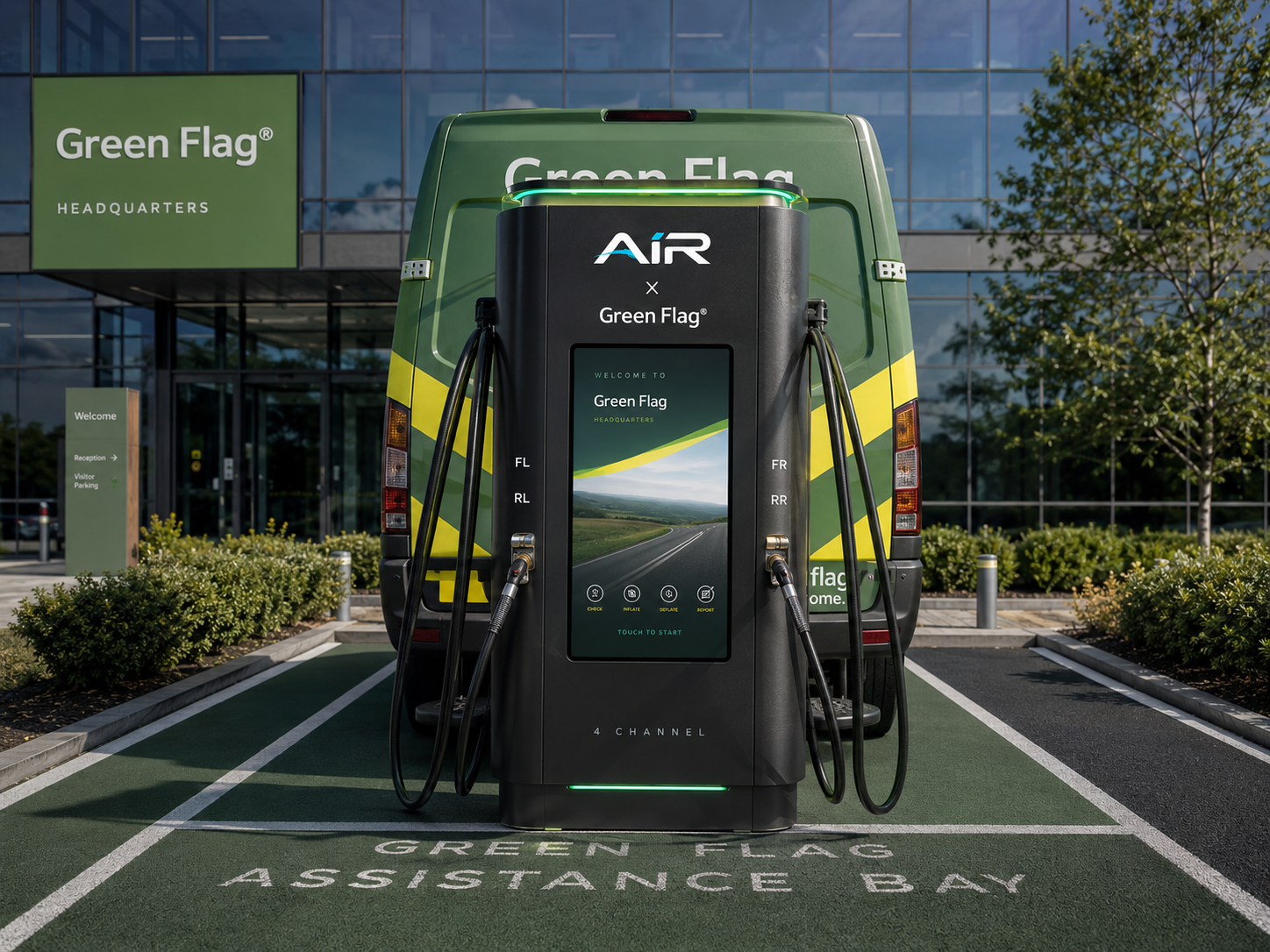
Tyre-related failures sit near the top of every roadside reason code, and almost all of them begin as a pressure that nobody measured. The recovery programme puts a co-branded AiR smart pump and a guided app lap of the car into the member's hands, then keeps the record.
Concept co-branding created for partnership evaluation only. Not endorsed products. Commercial figures are simulated real-world data being used for demonstration purposes.
Guided walk-around
One lap of the car
The app leads and holds each corner until it reads correct.
Set the journey, not the car
Step 00Before a single hose is touched, the app asks who is travelling and what is on board: solo, two up, family plus luggage, roof box, towing, motorway or town. The target set is built for that journey rather than the worst case printed on the door frame.
Front left - connect
Step 01The app opens at the driver's front corner and holds there. Push the chuck on, and the live reading appears within two seconds with the target beside it. Nothing else on screen can be tapped until this corner reads.
Front left - check, inflate, confirm
Step 02The pump corrects to target and settles, then reads back the final figure. The corner turns green, the value is written to the log with a timestamp and ambient temperature, and only then does the app advance.
Front right
Step 03The same four beats on the passenger front corner. Cross-axle difference is checked as the second reading lands: more than 2 PSI between a pair is flagged as a possible slow leak or a valve issue, not silently equalised.
Motorsport precision
Hundredths of a bar
Pressure is a primary safety system, not a forecourt afterthought.
Pit lane works in hundredths of a bar
0.01 barA race engineer sets cold pressures to 0.01 bar, roughly 0.15 PSI, because that resolution changes contact patch shape, tyre temperature and the point at which the car loses grip. Nothing about that physics is exclusive to a racing car.
The road user works in whole guesses
about 30A forecourt airline reads to the nearest whole PSI on a good day, is frequently out of calibration, and is used against a single number remembered from a door frame. The gap between the two worlds is not knowledge, it is instrumentation.
Pressure is a primary safety system
Braking, steering, aquaplaningPressure sets the contact patch. The contact patch sets braking distance, steering response, aquaplaning onset and the load a sidewall carries over a pothole. It belongs in the same conversation as brakes and seatbelts, not with screen wash.
Load-aware targets, the motorsport habit
Per sessionNo team sets one pressure for every session. They set for fuel load, track temperature and stint length. This programme brings the same habit to a road car: set for the journey in front of you, then prove it was set.